By Mary Beth Kuenzel (FL)
In December 2025, the Second District Court of Appeal moved into a new courthouse in St. Petersburg, Florida. The courthouse is home to more than the Second DCA. It is also home to two remarkable works of art that reflect the court’s judicial mission and the city’s thriving arts community.
Florida law sets aside a portion of the construction budget for state buildings to be spent on public art. For the new courthouse, the Art in State Buildings program provided $100,000 for art that would complement the building’s architecture and enhance the experience of those who visit.
Selecting the artwork was no small undertaking. An Art Selection Committee was assembled, bringing together representatives of the court, the architectural team, and the local arts community. I was honored (and a little intimidated) to be appointed to this committee.
From 53 Artists to Two
The committee received 53 qualified submissions from artists across the country in response to its request for proposals. Following a blind review, the field was narrowed to eight artists for further consideration. Four finalists were then invited to develop proposals for artwork in one of three locations: the front lobby, the rear lobby, or an outdoor space at the southwest corner of the courthouse. Each finalist received a $1,000 stipend and presented a proposal to the committee, either in person or via Zoom.
Throughout the process, the committee looked beyond artistic appeal alone. The goal was to select artwork that would be visually compelling, durable, appropriate for a courthouse setting, and meaningful to the people who work in and visit the building.
Ultimately, the committee selected two artists whose work would bring very different, yet complementary, artistic expressions to the courthouse: muralist Ralph Gilbert and glass artist April Wagner.
Ralph Gilbert: Telling the Story of Justice
Atlanta-based artist Ralph Gilbert is known for his large-scale murals, which use storytelling and iconic figures to explore themes rooted in history, culture, and the human experience.
His previous commissions include the Lilly Library Bicentennial Murals at Indiana University in Bloomington, a series spanning 100 linear feet of the library’s reading room, and six murals for the grand waiting room of the historic St. Paul Union Depot in Minnesota.
Gilbert’s mural occupies a prominent location in the courthouse’s front lobby, above the entrance to the rear lobby and beneath the glass wall overlooking the space from the second floor.
Gilbert approached the commission with a desire to understand not just the building, but the institution it houses. He made multiple visits to the courthouse and met with judges and court staff to learn about the work of the court and the role of the judicial branch. Those conversations helped inform a mural rich in imagery and symbolism, celebrating both the administration of justice and the people who make it possible.
At the center of the mural is the solemn occasion of a judge taking the oath of office, a powerful reminder of the responsibilities entrusted to the judiciary. Surrounding this central scene are the many people who are part of courthouse life: attorneys, security officers, visitors seeking assistance at the clerk’s window, and even a janitor—a cameo appearance by the artist himself. Together, these figures recognize that the work of the courts involves far more than what happens on the bench.
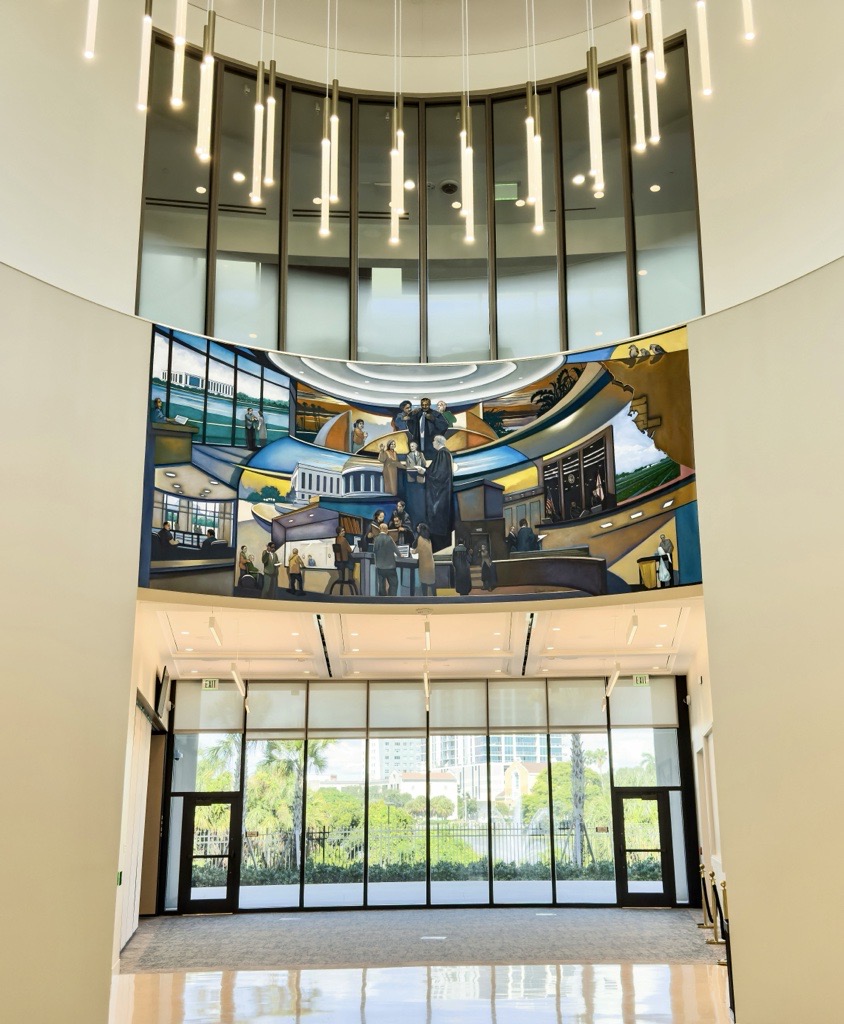
The mural also pays tribute to the court’s history. Among its details are the leather-bound docket books that recorded case activity long before electronic case management systems became part of everyday court operations. And tucked into an upper corner are three little birds—mockingbirds, Florida’s state bird—adding a distinctly local touch.
The result is a work that invites visitors to look closely and discover something new with each viewing. More than a decorative addition to the courthouse, Gilbert’s mural tells a story about the judicial system, its history, and the many people who contribute to its work. Learn more about the artist at www.ralphgilbert.com.
April Wagner: Capturing Light and Place
April Wagner, a glass artist based in Pontiac, Michigan, creates sculptural works distinguished by their elegance, organic forms, and interaction with light. Her artwork appears in numerous public, private, and corporate collections, including installations at the Oregon Supreme Court Building in Salem and the Midwest Medical Center in Dearborn, Michigan.
Wagner was initially invited to propose artwork for the front lobby. As the committee’s deliberations moved toward selecting Gilbert’s mural for that location, she was asked to develop a second proposal for the rear lobby.
The resulting installation features individually blown glass clam shells arranged in clusters along a wall of the rear lobby. The delicate forms and luminous glass evoke the natural environment of coastal Florida, particularly Mirror Lake, which lies just behind the courthouse and is visible through the lobby’s expansive west-facing glass walls.
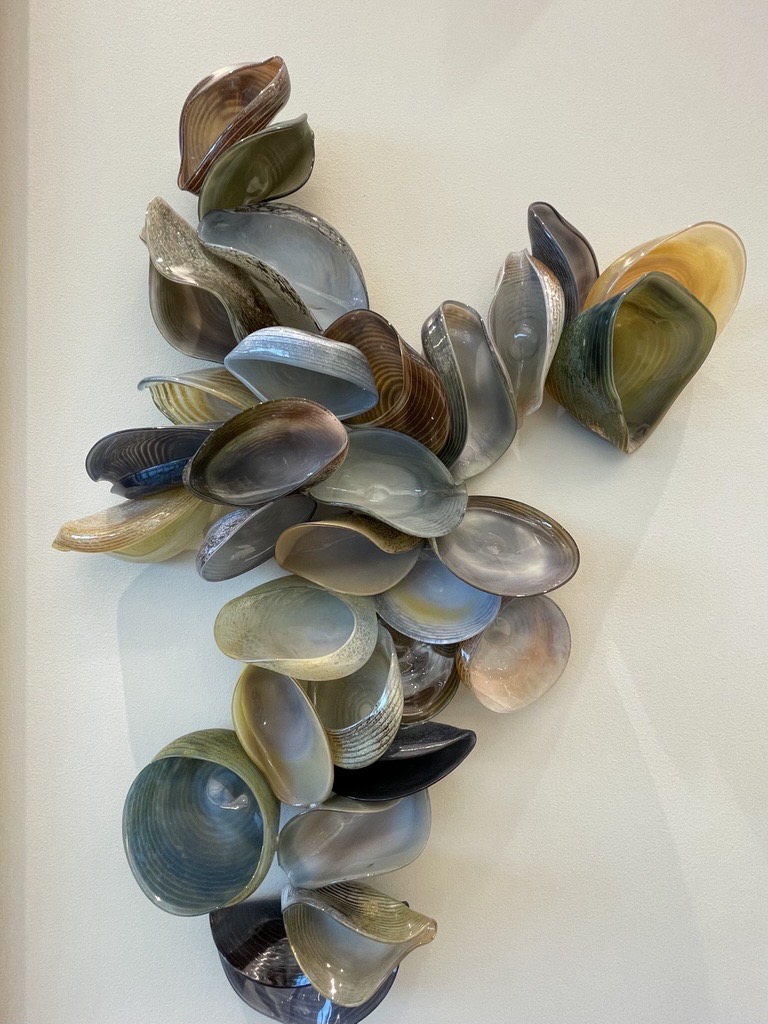
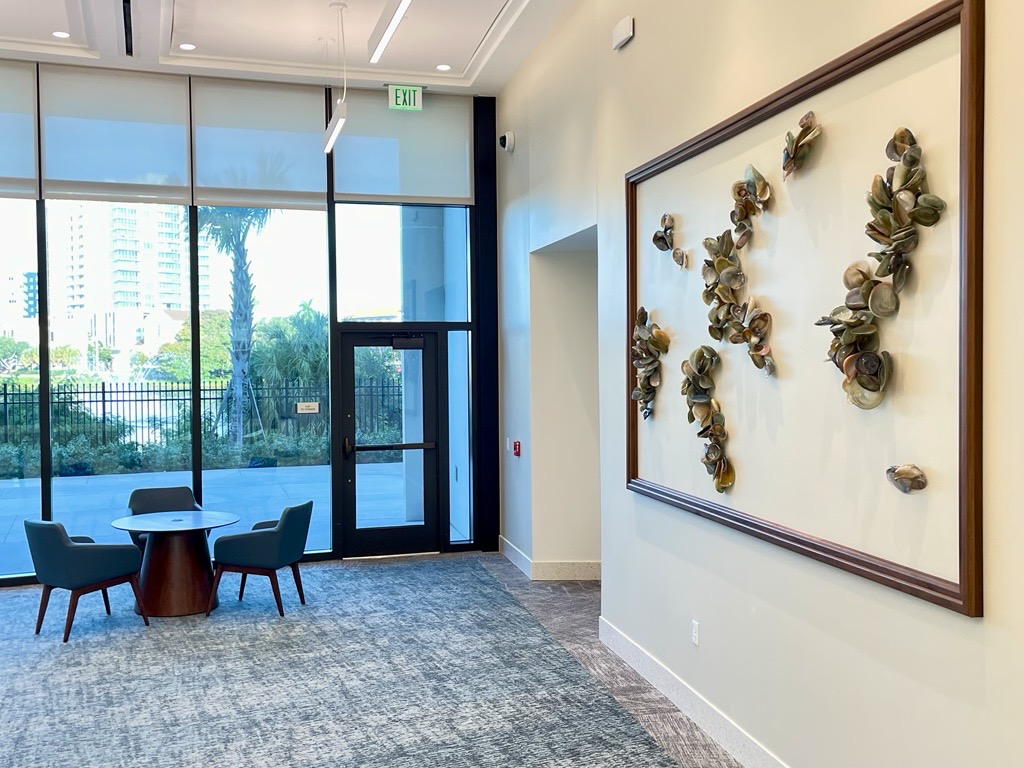
The installation creates a beautiful connection between the interior of the courthouse and the natural landscape beyond it, bringing a sense of place to the building. Learn more about the artist at www.aprilwagner.com.
A Courthouse Reflecting Its Community
St. Petersburg is widely recognized for its vibrant arts scene, including its many murals, galleries, museums, and glass art. The selection of a mural and a glass installation was therefore especially fitting for the city’s newest courthouse.
The committee was fortunate to receive submissions from so many talented artists, and the two selected works reflect the care and thought that went into the process. Each brings something distinctive to the building while contributing to a shared goal: creating a courthouse that is not only a place for the administration of justice, but also a welcoming and inspiring public space.
Together, the works of Ralph Gilbert and April Wagner add beauty, character, and meaning to the courthouse—reminding us that even in buildings devoted to the serious work of justice, there is an important place for art.